Mount Liavaag — Coordinates: 77°22'S 86°29'W
Mount Liavaag is a 1820-metre-high mountain in Antarctica 77°22'S 86°29'W (Archive.org, 2026). The mountain lies between Mount Holmboe and Holth Peaks near the north end of the Sentinel Range in Ellsworth Mountains, Antarctica. Mount Liavaag was discovered by Lincoln Ellsworth on his Trans-Antarctic Flight Expedition 23 November 1935. The name of Mount Liavaag was provided by the Advisory Committee on Antarctic Names (US-ACAN) for First Mate Lauritz Ludvig Martin Liavaag at M/S Wyatt Earp in 1936. He was also a member of two previous expeditions to the Antarctic with Lincoln Ellsworth.
From Sunnmøre to Antarctica
The American Lincoln Ellsworth and the Australian polar explorer Sir Hubert Wilkins had a desire to be the first to fly over the South Pole, from coast to coast. At the same time, the goal was to map the landscape. The first to achieve this were the Norwegian Bernt Balchen and the American polar explorer Richard E. Byrd in November 1929. The ship M/S Wyatt Earp found Hubert Wilkins in Ålesund. The ship, which was built as a fishing boat in 1919, was then called M/S Fanefjord, and was owned by the company of the same name (Maynard, 2019). The ship was robust enough for Antarctic conditions, and it could carry an aircraft. The Ellsworth expeditions were the name of a total of four polar expeditions to Antarctica between 1933 and 1939. Lauritz Ludvig Martin Liavaag was the only Norwegian to be on all four expeditions. The first two as second mate, the last two as first mate.
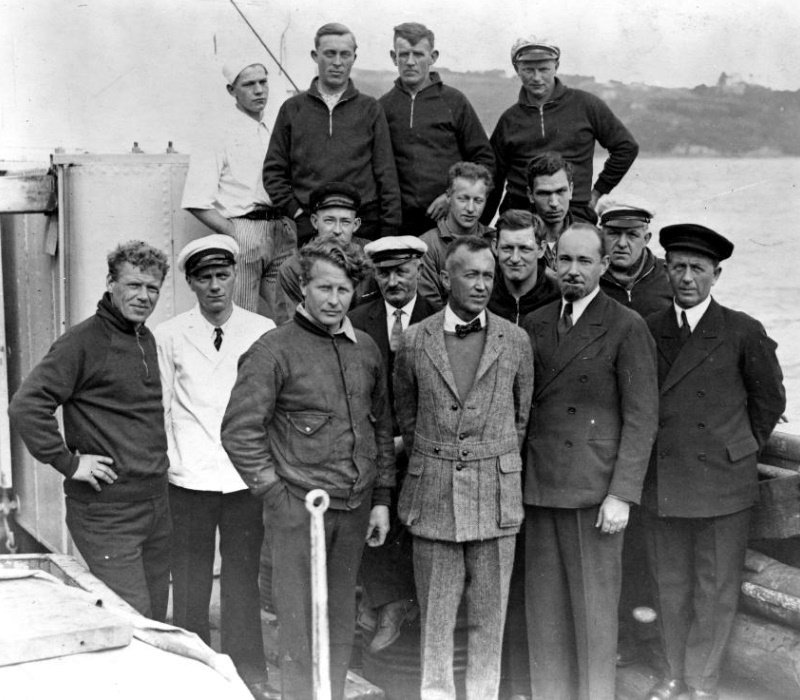
Below is a historical map of the area. Click on the historical map to enlarge it so that you can study the details of the Ellsworth Mountains and Mount Liavaag. At the bottom are two pictures of Lauritz Ludvig Martin Liavaag, as well as the rest of the crew of Ellsworth's expedition circa 1933.
Map of Northern Sentinel Range in Ellsworth Mountains, Antarctica
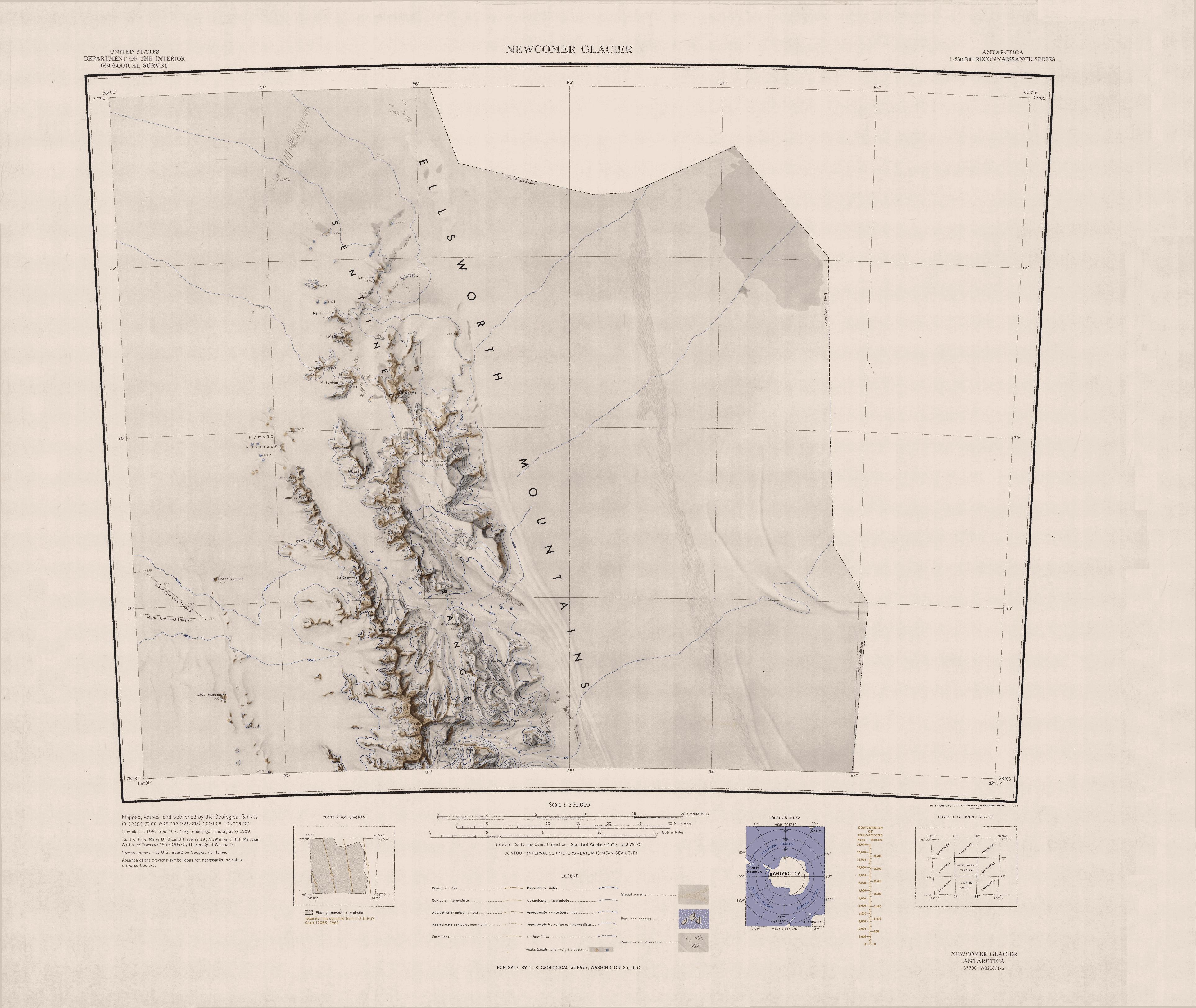
Click on the map for larger resolution.
Members of the Ellsworth Expedition
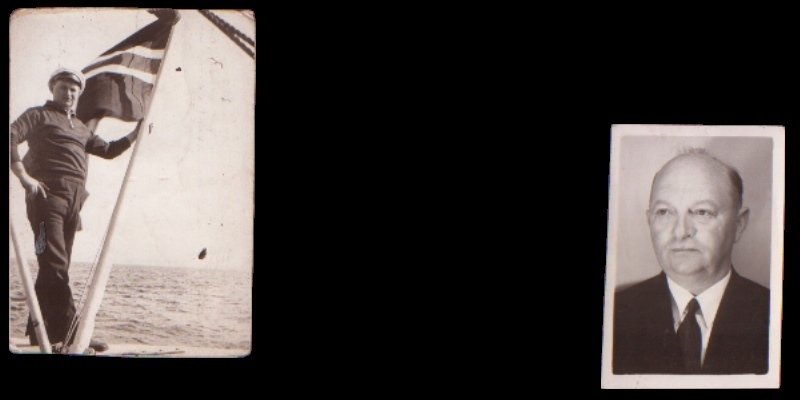
The two pictures at the top: First Mate Lauritz Ludvig Martin Liavaag
Behind: Bjarne Larsen (cabin boy), Dr. Reals Berg, Ingvald Strøm, and Lauritz Liavaag (who in 1933 was second mate)
Middle: Harald Bigseth (assistant engineer), Harald Holmbo (chief engineer), and Walther J. Lantz (radio operator)
Front: Chris Braathen (aviation mechanic), Oluf Dahl (chief steward), Bernt Balchen (pilot), Olsen (first mate and relief pilot),
Lincoln Ellsworth (leader), Jørgen Holmboe (chief engineer), Sir Hubert Wilkins (advisor), Magnus Johannessen, and Captain Bård Holth
Sources
- Archive.org. (2026). Antarctica Detail. [online] Available at: https://web.archive.org/web/20210602222658/https://geonames.usgs.gov/apex/f?p=gnispq:5:::NO::P5_ANTAR_ID:8794 [Accessed 10 Apr. 2026].
- Wikipedia (2015-11-12) Mount Liavaag, [[online] Available at: https://en.wikipedia.org/wiki/Mount_Liavaag [Accessed 2 June 2017].
- United States Antarctic Resource Center of the US Geological Survey (1961) Map of Northern Sentinel Range in Ellsworth Mountains, Antarctica, [[online] Available at: https://usarc.usgs.gov/drgs/dir1/c77082s1.jpg [Accessed 2 June 2017].
- Strømsborg, M.R. Liavaag (2017). Mount Liavaag – LiavaagWiki. [online] Liavaag.org. Available at: https://www.liavaag.org/wiki/index.php?title=Mount_Liavaag [Accessed 10 Apr. 2026].
- Maynard, J. (2019). Antarctica’s lost aviator : the epic adventure to explore the last frontier on Earth. New York: Pegasus Books.